
Curated. Crafted. Timeless.
Extraordinary Pianos. Inspired by Tradition.
We curate the world's finest grand pianos for discerning musicians, private residences, and concert halls.
Scroll
We curate the world's finest grand pianos for discerning musicians, private residences, and concert halls.


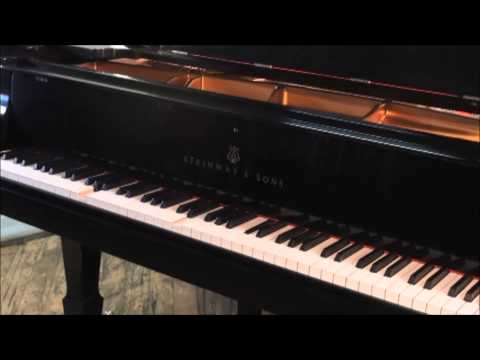
A Steinway is not merely a piano. It is the culmination of generations of craftsmanship, passion, and an unrelenting pursuit of perfection.
Cantabile Piano Arts is a premier destination for discerning pianists and collectors. From timeless Steinway concert grands to rare historical instruments, we bring together beauty, performance, and unmatched craftsmanship.
Our team of certified technicians and passionate piano specialists are dedicated to matching every client with their perfect instrument — whether for a private home, concert stage, or institution.

Cantabile is owned and managed by Luis Cajas and Carlos Macancela (Frankie).
In today's disposable consumer world, it's gratifying to know that a piano that was built fifty to one hundred years ago can be brought back to its original magnificent state.
We have skilled artisans who focus mainly on the style and architecture of our pianos. They are able to bring back its original appearance back to life. The precision of every cut is acquired by their wide experience in creating unique works of art.
We have over 30 years of experience bringing back the magic and the art of piano manufacturing.
Luis Cajas — one of the owners of Cantabile, devotes his time to restore the piano's inside in order to restore it to its former glory. He is specialized on the soundboard, which is an essential part in not only the piano but also in other string instruments like the guitar or violin.
Carlos Macancela (Frankie) — the other owner, devotes his time in restoring the outside of the piano. He works on the body paint and polishing in order to reveal the glamour of the piano.
Ivan Brunner — obtained a degree in Piano Technology from École Professionnelle de la Société Industrielle et Commerciale in Lausanne, Switzerland, involving an intense, hands-on apprenticeship covering all areas of rebuilding and restoring pianos. For the past 28 years he has been mastering his skills working with professional pianists, vocalists, conductors, composers, teachers and students. He recently designed the new piano showroom for Cantabile Piano Arts. Ivan specializes in custom action and voicing work, ensuring that each pianist will easily obtain the beauty and range of colors their piano offers.
This work is more than just a job for these people. It has become their passion — bringing them closer together as a family working to deliver only the best results without cutting corners.

The thorough restoration of your piano is a complex and beautiful thing, and at Cantabile, no shortcuts are taken. Our approach is a holistic one that takes into account the condition and performance ability of each component, no matter how small. We have skilled artisans who focus mainly on the style and architecture of our pianos. They are able to bring the original appearance back to life. The precision of every cut is enabled by their wide experience in creating unique works of art.
Refinishing the exterior of a piano is a very labor-intensive process, but the rewards can be amazing. Many of the veneers used on older pianos are almost impossible to find nowadays, and once the old, yellowed varnish or lacquer is removed, the real beauty of the wood emerges for the first time in years.
The piano case is disassembled and the parts are stripped of the old finish down to the bare wood. The parts are sanded, stained and sealed, then sprayed with several coats of lacquer, followed by sanding between coats. You can expect to be without the use of your piano for many weeks during this process. After refinishing thousands of pianos, we are still amazed each time by the transformation from what was formerly an ugly duckling of a piano into a swan-like grand.
There are several types of lacquers and finishes available, including lacquer, polyurethane, water-based finishes, and polyester. Finishes may be traditional satin, high polish or satin-luster, a type that offers a slight sheen without being overly shiny. A high gloss clear finish enhances wood grain because it acts as a lens to allow us to view the surface with reflective brilliance: glossy finishes are not difficult to maintain, because simply wiping the instrument with a soft cloth keeps it polished.
For antique, highly-detailed, carved, or ornamented pianos, we offer true French polish finishing. This ancient hand-refinishing technique is performed by applying and buffing out multiple coats of alcohol-based shellacs, ultimately yielding a very thin, high gloss finish. Shellac flakes are dissolved and mixed in with denatured alcohol. The finisher applies coat after coat of shellac to "build" the finish to the desired thickness. French polishing is a difficult, labor-intensive skill, and we are very pleased with our mastery of it.

The vibration of a piano's strings alone would be too quiet to be heard; their sound must be amplified. Piano strings, like those of a violin or a guitar, press down on a bridge which conducts their vibration to the large, thin piece of wood called the soundboard. Wooden ribs glued across the board, underneath, help spread the strings' vibration throughout its mass.
While a crack in a violin body is a very serious matter, a crack in a piano's soundboard can be repaired easily, without losing any of the piano's tone quality. Maintaining proper humidity during the winter heating season helps to prevent cracks from occurring.
The sound board is a five-eighths inch thick wooden board in the back of the piano. On the back of it, it has one-inch ribs which stabilize it by running against the grain of the sound board. The traditional sound board is made of several five-eighths thick boards glued side by side across the whole inside of the piano. It is the best sounding board, but with age, it can crack.
Our Sitka Spruce and Canadian Spruce soundboards are glued down to the perimeter of the piano case and bellied like a diaphragm in the center to best amplify the tone of the struck piano strings.
The soundboard is not flat as it appears, but has a crown held in place by a series of ribs. If the soundboard were flat or if it were to lose this crown, there would be very little volume or tone. The ribs are made of a lightweight wood such as sugar pine, are double notched and fitted into soundboard lining. They are tapered to fit and correspond with the taper of the soundboard.
The soundboard in an upright piano often has its properties diminished since it is frequently situated against a wall and enclosed in its case. Conversely, the soundboard of the horizontal grand has the advantage of open space between the bottom of the case and the floor, as well as its opened top — yielding a clearer, more present sound.

The pinblock (or the wrestplank as it is sometimes called) is the block of wood that is behind the plate of the piano and holds the tuning pins tightly. It is one of the most important parts of the piano. Its job is to grip the tuning pins so that the piano does not go out of tune.
In most grand pianos, the pinblock is not visible, but is directly underneath the tuning pin portion of the plate. It must be built strong enough to withstand the cumulative force of all of the strings pulling on the tuning pins.
Pinblocks do not always have to be replaced. There are seven different sizes of pins but size 1 or 2 works best. A lot depends on the age and condition of the pinblock and the piano itself.
As a piano ages it often suffers from the extremes in temperature and humidity, which can cause the tuning pins to become loose. This happens because the wood of the pinblock shrinks and the size of the hole into which the tuning pin is installed expands.
If only one or two tuning pins are loose, an appropriate repair is to remove the tuning pin and to replace it with a larger sized tuning pin, or to install a shim in the tuning pin hole. Either of these repairs will provide enough friction to allow the piano to be tuned again.
Experienced craftsmen set the exact location of the pin and tuning-pins, as the cuts of the pin are all handmade. The pin and its position are measured for each piano individually with special tools.

The piano's massive plate frame — sometimes referred to as the "harp" — is made of cast iron. The casting of a piano's plate is a delicate science and art, since the dimensions are crucial and the iron shrinks by about one percent during cooling.
The strings of a piano individually have from 150 to 200 pounds of tension, and the cumulative forces acting on a piano can be anywhere from 20,000 to 40,000 pounds.
The piano is a stringed instrument. Its many parts are organized into five general structural and mechanical areas of either grand or vertical pianos: the case of the wing-shaped grand piano (or the cabinet of the vertical or upright piano); the soundboard and the ribs and bridges that are its components; the cast iron plate; the strings; and, collectively, the keys, hammers, and piano action or mechanism.
The case has many structural parts for attaching legs and tuning pins, but perhaps the rim and the keybed or shelf where the keys and piano action will be installed are most important.
The soundboard amplifies the vibrations of the strings, which are transmitted through bridges. The cast iron plate is installed over the soundboard and pinblock (part of the case), and it provides the strength to anchor the strings under tension.
Nose bolts and perimeter bolts anchor the plate to the braces and inner rim of the case. The 220 to 240 strings of the piano are attached to hitch pins along the curved edge of the cast iron plate and to tuning pins across the front of the piano, roughly parallel to the keyboard.

Pressing a key on the piano's keyboard causes a felt-covered hammer to strike strings. The hammers rebound, allowing the strings to continue vibrating at their resonant frequency. These vibrations are transmitted through a bridge to a sounding board that couples the acoustic energy to the air so that it can be heard as sound.
When the key is released, a damper stops the string's vibration.
The average modern piano has over 230 strings under a combined tension of 15 to 20 tons. A concert grand piano may have a combined string tension of up to 30 tons.
Pianos made in the eighteenth century were not as powerful and used low-tension wire made from an alloy different from the wire used today. Piano strings are made of high quality steel and must be able to endure years of extreme tension and fortissimo playing. Strings are manufactured in various diameters, with the thinnest wire employed in the highest treble while ascending in larger diameters down to the bass note section.
Broken piano strings need to be replaced quickly to reduce uneven wear on the hammer. They can be replaced with a brand new string or repaired with a short piece of wire.
When restringing a piano with new strings, the steel strings are removed and carefully measured to determine what size of strings should be used for replacement. Bass strings must be removed and duplicated off-site and then replaced at a later date.
Please Note: After a piano has been restrung, it should be tuned a minimum of four times the first year.

The working mechanism of the modern acoustic piano is made from the same materials as those used in the manufacturing of the first pianos — over 300 years ago. The main components of the action are wood and felt. Even the most famed and modern piano manufacturing facilities fully assemble the mechanism by hand.
Because of its construction, the piano action is liable to be affected not only by mechanical wear and tear, but also by the ever-changing temperature and humidity levels surrounding the piano. In order to prolong the life of the action and its optimal performance, most manufacturers recommend that the action be regulated at least once every two years. Depending on the climate and use, the schedule may be more frequent.
Piano keys are generally made of spruce, sugar pine or basswood for lightness, yet maximum strength. Spruce is normally used in high-quality pianos. Traditionally, the sharps/flats (black keys) were made from ebony and the naturals (white keys) were covered with strips of ivory, but since ivory-yielding species are now endangered and protected by treaty, fine plastics are now almost exclusively used.
When a piano is being regulated, rebuilt, or restored there are several details that frequently are overlooked in the process. One of the first things to be noticed when approaching a piano for the first time is the way the key tops look and feel. Often you can get an idea of the condition of the rest of the piano just from your first impression at the keyboard.
The keys are the pianist's connection to the piano. They must have a pleasing appearance and must feel good when your fingers touch them. There must not be too much friction, or the action will be sluggish; however, the keys must not be so loose that they wobble from side to side or make unwanted noise that would detract from the music.
Keyboard Replacement
Perhaps you have a vintage piano that has a number of problems with the keyboard, or perhaps the keyboard has been extensively damaged. In such a case, it is possible to replace the entire set of keys and key frame. However this is an expensive operation costing several thousand dollars and it is usually only suitable for pianos that are undergoing complete restoration.

Piano tuning is the act of making minute adjustments to the tensions of the strings of a piano to properly align the intervals between their tones so that the instrument is in tune. Fine piano tuning requires an assessment of the interaction between notes, which is different for every piano, thus in practice requiring slightly different pitches from any theoretical standard.
We recommend that a piano be tuned at least twice each year. However, it may be necessary to have your piano tuned four times a year — at the change of each season — if climate conditions are not ideal or if one simply retains sensitive ears.
Pianos are primarily created from wood, and are affected by climatic changes. Changes in humidity result in the swelling and contracting of this wood, resulting in constant increases and decreases of string tension, thereby continually changing the tuning. Proper string tension and tuning must be consistently maintained.
People receive and maintain the best tone quality from their piano when it is tuned on a consistent basis. When a number of years pass between tunings, the pitch will often drop — far enough at times that two or more tunings will be necessary to restore the pitch to the proper level of Concert A-440/A-442 pitch.

When considering the refinishing of a piano, one must be aware of the various products and methods available, as well as what is appropriate to a particular piano. Traditionally, the object of refinishing a piano is to restore the original look of the instrument. However, some people opt to change the color of the piano in order to have it fit in with the decor and the other furnishings in their homes.
The work for the furniture part of the piano:
We generally do not recommend turning a piano that was made in Ebonized finish to a wood type finish, as the grade of wood is usually not the type that is carefully matched.
There are several types of lacquers and finishes available, including lacquer, polyurethane, water-based finishes, and polyester. For antique, highly-detailed, carved, or ornamented pianos, we offer true French polish finishing — a hand-refinishing technique performed by applying and buffing out multiple coats of alcohol-based shellacs, the way pianos were finished many years ago.
Our clients may choose the type of finish they prefer: traditional satin, high polish, or satin-luster — a type that offers a slight sheen without being overly shiny. A high gloss clear finish enhances wood grain because it acts as a lens to allow us to view the surface with reflective brilliance.
French Polishing
An ancient technique of wiping or rubbing shellac to apply a very thin high gloss finish. Shellac flakes are dissolved and mixed with denatured alcohol. The finisher painstakingly applies coat after coat of shellac to "build" the finish to the desired thickness. Fancy pianos often had a much thicker application of French polish than plain models in order to show off elaborate inlay work under a high gloss. French polishing is a difficult, labor-intensive skill to master.

The Live Performance LX Reproducing System is the result of over thirty years of research and refinement in the field of solenoid-based player piano technology. Its superb musicality, high resolution and robust design will enhance your piano for many years to come.
Model LX Reproducing System Details
Hidden Mechanism: Once installed, the playing mechanism is completely hidden from view. The note solenoids and their associated electronics reside within a cutout in the keybed. Underneath the keybed, only the note solenoid mounting rail is visible.
The hidden mechanism allows the use of conventional trapwork in a reproducing piano for the first time. Pianos equipped with the LX exhibit the same "look and feel" underneath as conventional grand pianos, making use of the lever arrangement that has been universal in piano construction for well over 100 years.
Such trapwork is extremely robust and is free from the problems that arise from the unusual levers required by other playing mechanisms, such as loss of the sostenuto pedal function and the need for frequent service to keep the sustaining pedal in adjustment.
From acquisition to ongoing care — we support every aspect of piano ownership.

Schedule a private appointment and experience our collection firsthand.
Schedule a Visit

